
Why Glamping Continues to Resonate with Travelers
Travel trends come and go.
Destinations rise in popularity, social media influences where people book, and new accommodations appear every year, promising a different kind of experience. Yet despite these changes, glamping has continued to grow. What began as a niche segment of outdoor hospitality has evolved into a global travel movement that shows little sign of slowing down.
The reason may be simpler than it appears.
At its core, glamping solves a problem that travelers have been trying to solve for more than a century. People want to experience extraordinary landscapes, but they do not necessarily want to sacrifice comfort to do so.
Long before the word "glamping" existed, travelers were seeking ways to stay closer to nature without feeling disconnected from the comforts that let them fully enjoy the experience. Some of the earliest examples emerged in East Africa during the late nineteenth and early twentieth centuries, when luxury safari camps were established to offer visitors access to remote landscapes and wildlife while providing comfortable accommodations, proper meals, and a welcoming place to return to at the end of the day.
The details have changed over time, but the underlying appeal has remained remarkably consistent. Travelers are still searching for meaningful access to places that feel different from everyday life. They want to wake up to mountain views, hear the wind moving through the trees, watch the stars emerge after sunset, and spend time in environments that feel open and restorative. At the same time, most travelers are not looking to abandon comfort entirely.
Glamping exists in the space between those desires.
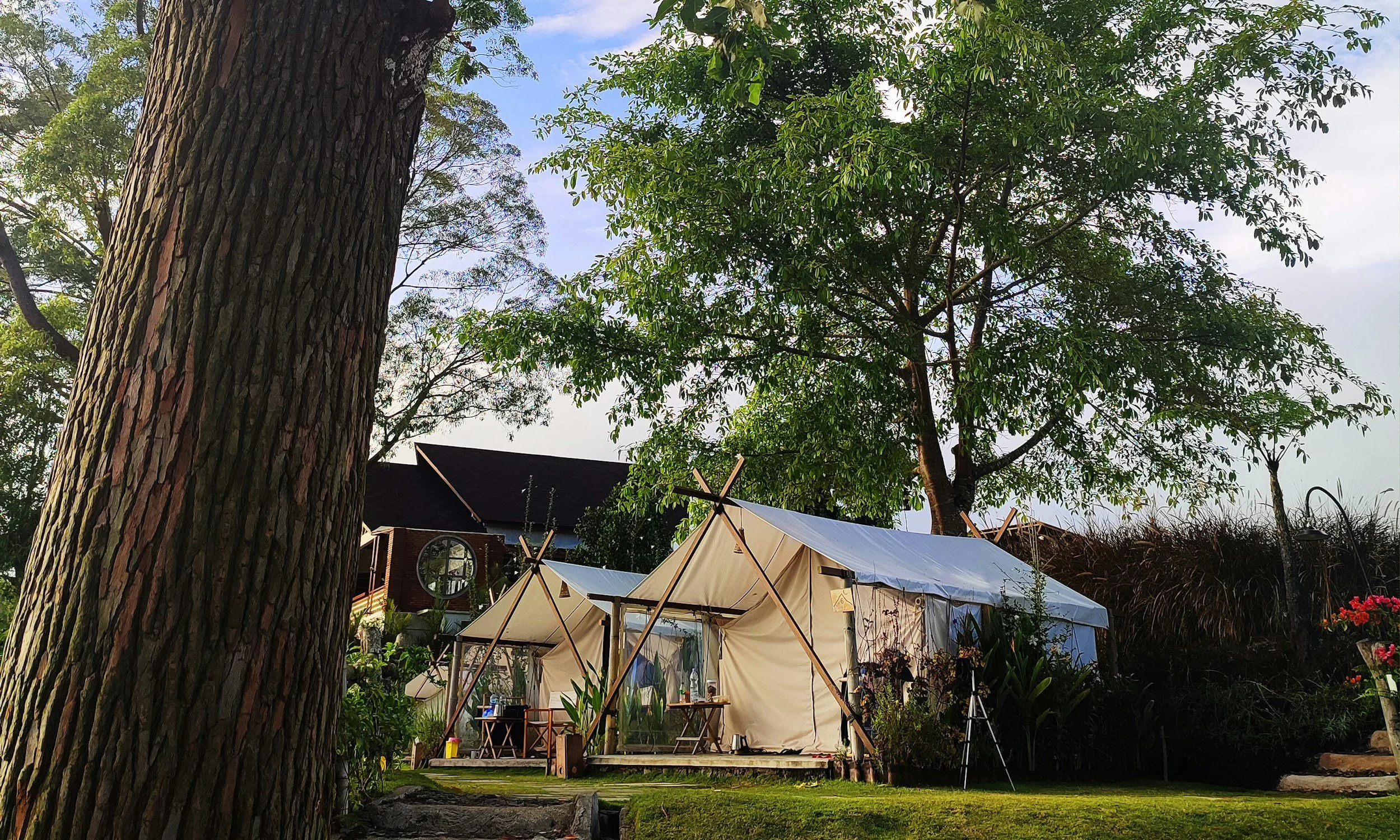
Unlike traditional hotels, which often separate guests from the destination itself, glamping accommodations are typically designed to bring the landscape closer. Whether the structure is a safari tent, a dome, a treehouse, a yurt, or an emerging mirrored cabin designed to visually disappear into its surroundings, the goal is often the same. The accommodation becomes part of the environment rather than a barrier between the traveler and the place they came to experience.
This relationship between comfort and immersion helps explain why glamping appeals to such a wide range of travelers. Families appreciate the opportunity to introduce children to the outdoors without the challenges that sometimes accompany traditional camping. Couples are drawn to the privacy, atmosphere, and sense of escape. Multi-generational travelers often find that glamping offers a balance of adventure and accessibility that works across age groups.
The appeal extends beyond the accommodations themselves. Many travelers are increasingly prioritizing experiences over possessions and meaningful memories over packed itineraries. A well-designed glamping stay naturally supports that shift. The destination becomes less about checking attractions off a list and more about spending time in a place that feels memorable in its own right.
This may be one of the reasons glamping has expanded so successfully across different regions and cultures. While the structures themselves vary widely, the experience often centers on the same principles. In Mongolia, luxury stays built around traditional gers allow guests to experience the vastness of the steppe. In Scandinavia, glass cabins create opportunities to watch the northern lights from bed. Across North America, safari tents, domes, treehouses, mirrored cabins, and other innovative structures invite travelers into forests, deserts, mountains, and coastal landscapes in ways that feel both immersive and comfortable.
The architecture changes, but the desire behind it remains familiar.
Today's travelers are also navigating a world that often feels increasingly fast, crowded, and digitally connected. Many glamping destinations offer something that has become unexpectedly valuable: space. Space to slow down. Space to reconnect with family and friends. Space to spend time outdoors without feeling rushed from one activity to the next.
That desire for a different pace of travel may be just as important as the accommodations themselves. The best glamping stays are rarely defined by luxury alone. What guests often remember most is how a place made them feel. The quiet morning with a cup of coffee overlooking a valley. The evening was spent around a fire. The stars visible through the roof of a dome. The feeling of being present in a landscape rather than simply passing through it.
More than a century after the first luxury tented camps welcomed travelers into remote landscapes, the fundamental appeal remains remarkably unchanged. People still want meaningful access to beautiful places. They still want comfort. They still want experiences that feel memorable, restorative, and connected to the world around them.
Glamping continues to resonate because it delivers all three. While the structures and destinations will continue to evolve, the desire that drives them has remained surprisingly constant. Travelers are not simply looking for a place to sleep. They are looking for a closer relationship with the places they visit, and glamping remains one of the most compelling ways to experience that.