
How to Plan a Glamping Trip You and Your Partner Will Both Enjoy
When one of you wants the wilderness and the other wants a real bed
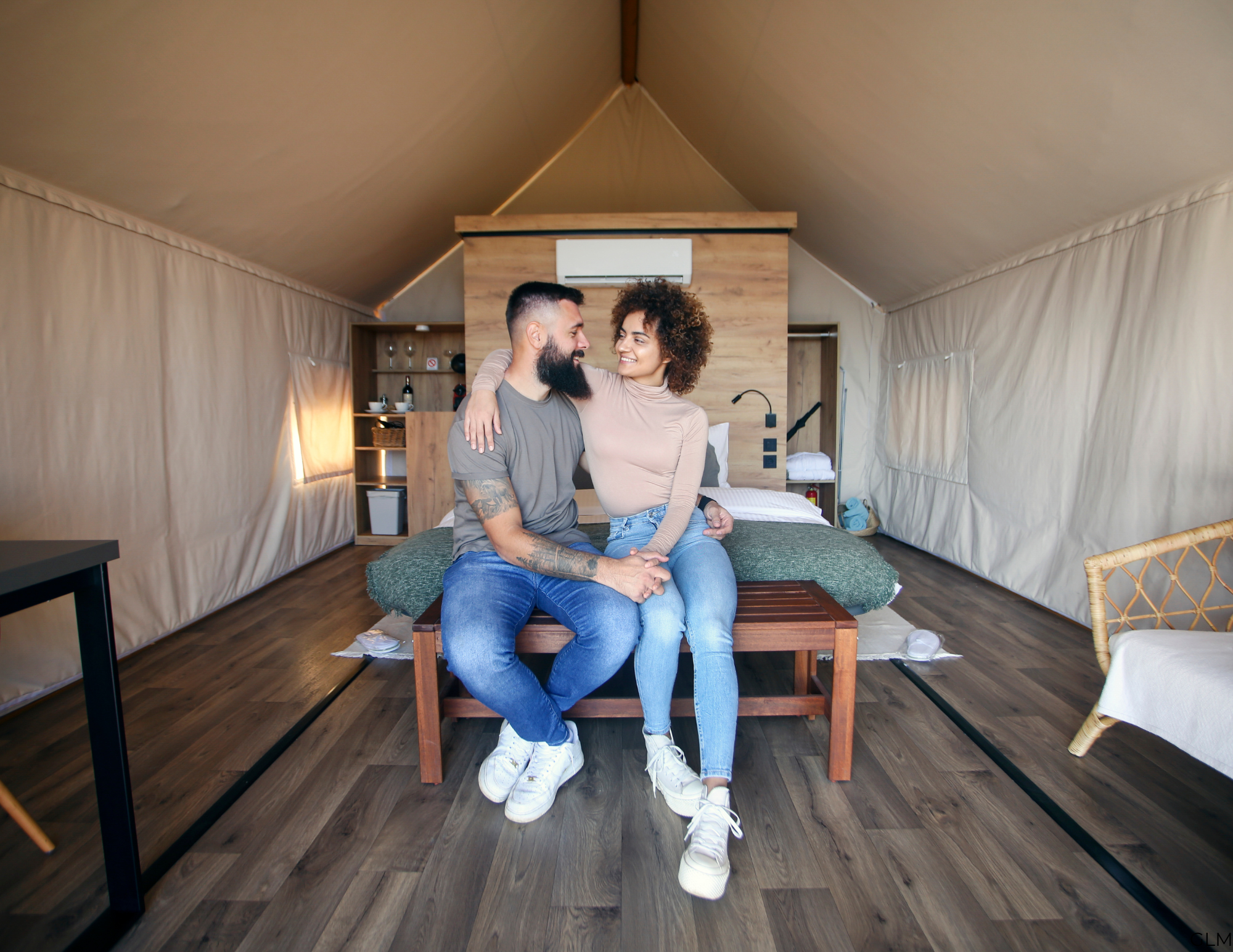
Some couples disagree about where to eat. Others disagree about how early to arrive at the airport. Then there are couples who start planning a vacation, only to discover one person has found a remote campsite with no cell service while the other quietly searches the photographs for evidence of indoor plumbing.
One imagines waking to birdsong, hiking before breakfast, and falling asleep beneath a sky crowded with stars. The other likes the stars perfectly well but would prefer to admire them after a hot shower, preferably while wrapped in something soft. This does not mean they are incompatible travelers. It simply means they have different ideas about what constitutes an escape.
For someone who loves traditional camping, the effort is part of the pleasure. There is satisfaction in choosing the site, pitching the tent, building the fire, and discovering how little is actually needed for a few days outdoors. For the person who prefers a real bed, however, vacation should not involve transporting an entire household into the woods only to recreate a less comfortable version of home. Somewhere between the sleeping bag and the hotel suite, glamping offers neutral territory.
Glamping is not simply an easier version of camping or a hotel experience moved outdoors. At its best, it offers a meaningful connection to nature while giving travelers the comfort they need to relax and enjoy their surroundings. Couples can spend their days exploring the landscape and still return to a warm shower, a comfortable bed, and a place designed for a good night's sleep. For couples standing on opposite sides of the camping aisle, that can be the beginning of a very good trip.
First, Determine What “Camping” Means to Each of You
Before anyone agrees to anything, it helps to establish what is actually being proposed. To an experienced camper, a weekend outdoors may mean a peaceful site beside a lake, mornings on the trail, and the welcome simplicity of leaving ordinary routines behind. To someone with less enthusiasm for camping, the same invitation may conjure an air mattress slowly losing its will to live, a flashlight clenched between the teeth during a midnight walk to the bathroom, and the unsettling realization that every sound outside the tent must now be identified. These are not minor differences in interpretation.
The word glamping can be equally misleading. One traveler may picture a beautifully furnished safari tent with a soaking tub and mountain views. Another may imagine an ordinary tent containing a duvet, a string of lights, and a nightly rate that raises several reasonable questions.
Both assumptions can be correct because glamping covers an enormous range of accommodations and experiences. There are canvas tents with private bathrooms, climate control, and chef-prepared meals. There are also off-grid yurts, simple domes, secluded treehouses, restored Airstreams, and tented camps where electricity is limited and the bathroom is a short walk away.
The first step is not deciding whether to go glamping. It is deciding what each person needs to enjoy the trip. For one partner, that might be direct access to hiking, fishing, paddling, skiing, or wildlife viewing. For the other, it might be a supportive mattress, temperature control, privacy, good food, and a bathroom with walls, a door, and no surprises. Once those requirements are spoken aloud, glamping stops being a debate over who has the better definition of outdoor travel. It becomes a search for the point at which both definitions meet.
Do Not Ask the Bed to Sell the Adventure
If a partner loves traditional camping, leading with high-thread-count sheets may not have the desired effect. A beautiful bed reassures the comfort-seeker, but it is unlikely to persuade someone who already owns a perfectly acceptable sleeping bag and considers using it part of the fun. Begin instead with the experience that surrounds the accommodation.
Glamping destinations center on fly-fishing, horseback riding, whitewater rafting, hiking, stargazing, skiing, mountain biking, wildlife encounters, and national park adventures. Some sit beside rivers or beneath dark skies. Others occupy working ranches, forested mountainsides, desert landscapes, and remote stretches of coast. Accommodation is where the day begins and ends, but it doesn't have to be the reason for going.
A canvas tent beside a productive trout stream makes sense to someone who wants to be on the water at sunrise. A yurt near miles of winter trails may appeal to a skier who would rather spend the day outside than in a resort lobby. A mirrored cabin near a national park can offer immediate access to the landscape, along with a memorable way to experience it, without requiring either partner to assemble a tent after a long drive.
A real bed does not diminish any of those experiences. It simply improves the odds that both travelers will be rested enough to enjoy them. Glamping becomes far more appealing when it is presented not as an alternative to adventure, but as a comfortable base for it.
Respect the Person Who Actually Likes Camping
In trying to make the outdoors more comfortable, it is easy to talk about traditional camping as though it is a hardship people tolerate until they can afford not to. That misses much of its appeal. Camping can offer independence, resourcefulness, quiet, and a satisfying break from environments designed to anticipate every need.
Preparing a meal over a fire, waking with the changing light, and carrying only what is necessary can feel freeing rather than inconvenient. Many campers do not want to be served, scheduled, or separated from the natural setting by layers of resort programming. A glamping property with constant staff attention, formal meals, and a full itinerary may therefore be the wrong choice, even if every detail is beautifully executed.
The dedicated camper may be happier in a secluded yurt, a geodesic dome, or a well-appointed canvas tent where privacy and access to the landscape matter more than turn-down service. The comfort-seeker may still have a good mattress, running water, and protection from the weather, while the camper retains the space and freedom that make outdoor travel appealing.
This is an important distinction. The objective is not to take a person who loves camping and persuade them to enjoy a hotel disguised as a tent. It is to find a stay that preserves what they love about the outdoors while addressing the discomforts their partner would rather leave behind.
Be Honest About What You Need
There is no moral victory in pretending to be more outdoorsy than one is. If a private bathroom will determine whether the trip is enjoyable, it belongs on the list of requirements. If summer heat makes sleeping impossible without air conditioning, that should be confirmed before booking. If being unreachable creates anxiety rather than relief, Wi-Fi or reliable cell service may matter. These preferences do not make someone demanding. They make that person more likely to choose the right trip.
The same honesty should extend to the partner seeking wilderness. A firepit positioned between closely spaced accommodations may not provide the solitude they imagined. A transparent dome can offer remarkable views while providing far less privacy than the photographs suggest. A property described as remote may still have a restaurant, spa, scheduled activities, and golf carts passing throughout the day.
Beautiful photographs can convey atmosphere, but they don’t always answer practical questions. Couples should look carefully at the bathroom arrangement, distance between accommodations, seasonal temperatures, dining options, accessibility, Wi-Fi, parking, and how much interaction with staff or other guests the stay requires. A few questions before booking can prevent unwelcome surprises after arrival.
Choose a First Trip with a High Chance of Success
Don’t treat a first glamping trip like an expedition designed to test the relationship. Two or three nights within a reasonable drive of home is often enough. It lets both partners try a different style of travel without committing an entire vacation to an experiment. If the weather changes, the accommodation feels less private than expected, or one person discovers that a composting toilet represents a personal boundary, the trip remains manageable.
The best first stay usually offers a little more comfort than the adventurous partner believes is necessary and a little more nature than the comfort-seeker would ordinarily choose. A private bathroom, dependable heating or air conditioning, a quality bed, and protection from bad weather provide a reassuring foundation. A firepit, outdoor seating, open views, nearby trails, and enough separation from neighboring accommodations maintain a genuine relationship with the setting.
Location also matters. A destination connected to something both travelers already enjoy will carry the experience. That might be a wine region, a national park, a historic town, a stretch of coastline, a ski area, or a place known for exceptional food. Even if glamping isn’t a shared passion, the trip still has another reason to succeed.
Allow Each Other to Vacation Differently
Couples do not need to experience every hour of a trip in precisely the same way. One partner can leave early for a demanding hike while the other takes coffee onto the deck and begins the day slowly. One can fish while the other schedules a massage, explores a nearby town, or reads beside the fire. They can meet for dinner with something new to share rather than spending the day negotiating a pace neither enjoys. This freedom may be one of glamping's most overlooked pleasures.
Traditional camping often requires cooperation simply to keep the trip functioning. There is equipment to unload, a tent to raise, food to store, meals to prepare, water to collect, and an entire temporary household to pack away at the end. For people who enjoy the ritual, those tasks are part of the experience. For couples with different levels of enthusiasm, they can become a running inventory of who is doing more work.
Glamping removes much of that friction. The fire can still be built and the day can still be spent outdoors, but no one has to inflate the mattress, level the tent, or insist that the gathering clouds will “probably pass.” Instead of asking both people to travel the same way, glamping gives them room to enjoy the same place differently.
The Best Compromise Does Not Feel Like One
A successful trip doesn’t end with one partner admitting the other was right. The camper may still prefer the ritual and simplicity of a traditional campsite. The comfort-seeker may still appreciate a private bathroom, a comfortable bed, and protection from the weather. Neither person must give up what matters most for glamping to become something they enjoy together.
What often changes is the belief that adventure and comfort weaken one another. A hot shower after a cold morning on the trail does not make the landscape less wild. A chef-prepared dinner does not erase the miles traveled on horseback. A heated yurt does not make the snow outside less beautiful. A good night's sleep may simply mean both people are ready to greet the next day in better spirits.
The most memorable glamping stays understand this balance. They do not use comfort to distract from the outdoors. They use it to help travelers remain present long enough to appreciate where they are.
When one partner wants the wilderness and the other wants a real bed, the answer is not to decide whose vacation matters more. It is to choose a place where the trail can begin outside the door, the evening can end beside a fire, and no one must sleep on the ground unless they genuinely want to. That is not a reluctant compromise between adventure and comfort. It is an escape with an identity of its own, and it may become the kind of trip neither partner knew they were looking for.